
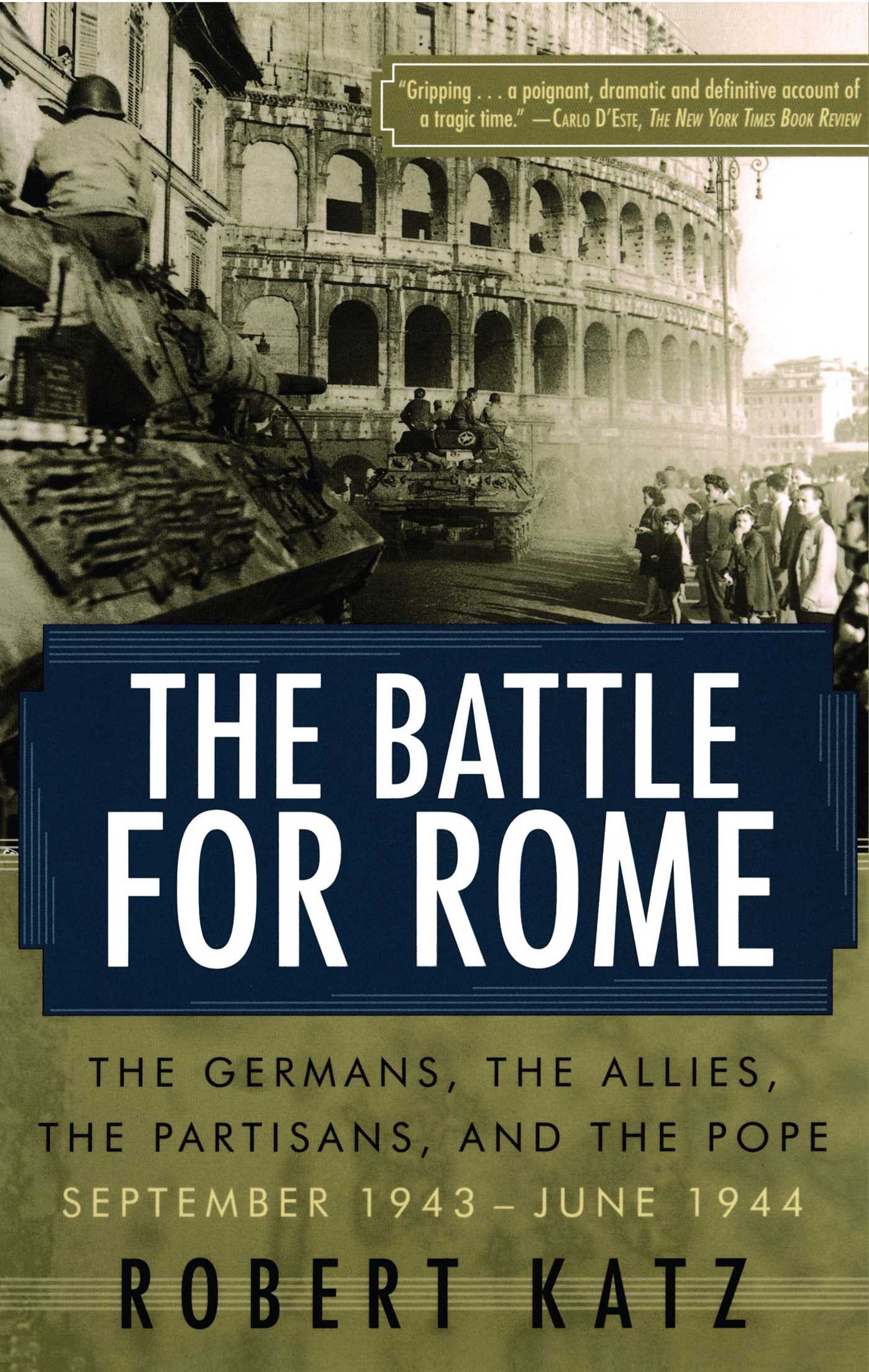
The Battle for Rome - The Germans, the Allies, the Partisans, and the Pope, September 1943-June 1944
15,59 €
Neuf · Vendu par Cultura FR · Prix à revérifier. Prix, stock et livraison à confirmer chez le marchand. Chercho partage cette offre et ne vend pas ce produit. Lien affilié.
In September 1943, the German army marched into Rome, beginning an occupation that would last nine months until Allied forces liberated the ancient city. During those 270 days, clashing factions -- the occupying Germans, the Allies, the growing resistance movement, and the Pope -- contended for control over the destiny of the Eternal City. In The Battle for Rome, Robert Katz vividly recreates the drama of the occupation and offers new information from recently declassified documents to explain the intentions of the rival forces. One of the enduring myths of World War II is the legend that Rome was an open city, free from military activity. In fact the German occupation was brutal, beginning almost immediately with the first roundup of Jews in Italy. Rome was a strategic prize that the Germans and the Allies fought bitterly to win. The Allied advance up the Italian peninsula from Salerno and Anzio in some of the bloodiest fighting of the war was designed to capture the Italian capital. Dominating the city in his own way was Pope Pius XII, who used his authority in a ceaseless effort to spare Rome, especially the Vatican and the papal properties, from destruction. But historical documents demonstrate that the Pope was as concerned about the Partisans as he was about the Nazis, regarding the Partisans as harbingers of Communism in the Eternal City. The Roman Resistance was a coalition of political parties that agreed on little beyond liberating Rome, but the Partisans, the organized military arm of the coalition, became increasingly active and effective as the occupation lengthened. Katz tells the story of two young Partisans, Elena and Paolo, who fought side by side, became lovers, and later played a central role in the most significant guerrilla action of the occupation. In retaliation for this action, the Germans committed the Ardeatine Caves Massacre, slaying hundreds of Roman men and boys. The Pope's decision not to intervene in that atrocity has been a source of
Informations sur cette offre
- Catégorie
- Loisirs · Livres
- État
- Neuf
- ISBN de cette édition
- 9780743217330
- Marchand
- Cultura FR